📺 Watch the Full Cooking Video Episode!
Want to see how Adobong Giniling na may Patatas at Repolyo is prepared step-by-step? Watch the full cooking video on our Video Hub to see exact heat controls, timing, and real preparation.
👉 Watch the Adobong Giniling na may Patatas at Repolyo Recipe Video →
Ingredients (Mga Sangkap)
- ✔ 500g Ground Pork (preferably with a 20% fat ratio for maximum succulence)
- ✔ 3 large potatoes, peeled and cut into uniform 1-inch cubes
- ✔ 1/2 head of green cabbage, shredded into wide, rustic ribbons
- ✔ 1 head of garlic, cloves peeled and crushed with the back of a knife
- ✔ 1 medium red onion, finely diced to create a sweet base
- ✔ 1/2 cup high-quality cane vinegar for that signature sharp tang
- ✔ 1/3 cup premium soy sauce for depth and umami
- ✔ 3 dried bay leaves for earthy aromatics
- ✔ 1 teaspoon whole black peppercorns for a gentle, woody heat
- ✔ 3 tablespoons neutral cooking oil
- ✔ 1/2 cup water or pork broth for braising
The Soul of the Filipino Kitchen
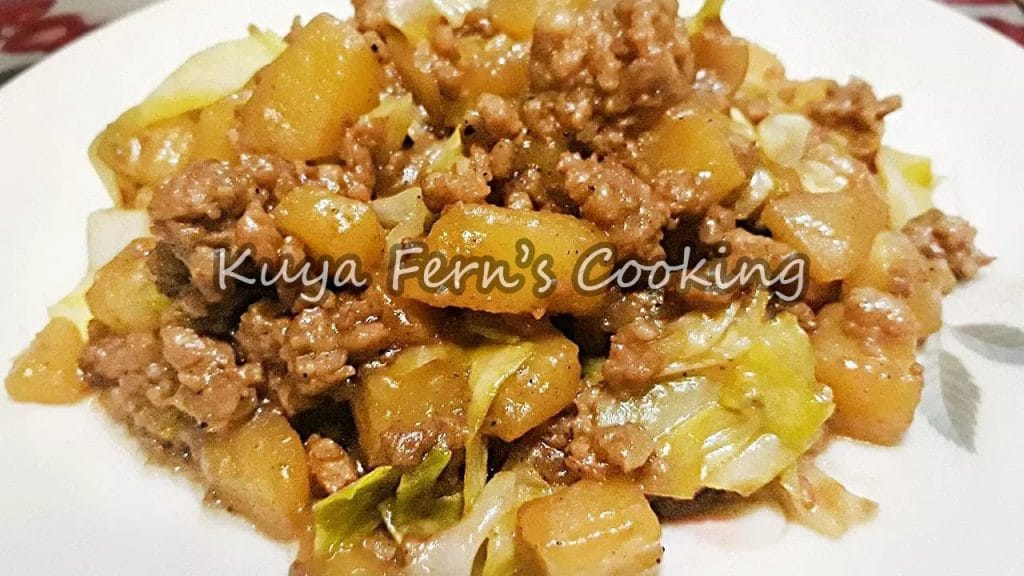
Adobong Giniling na may Patatas at Repolyo is not merely a recipe; it is a narrative of Filipino resilience and ingenuity. In the heart of a traditional Mavhic home, the kitchen is where the day begins and ends. This dish represents the quintessential ‘lutong bahay’—home-cooked food that speaks to the soul. By utilizing ground pork, the dish achieves a texture that is both democratic and approachable, allowing every spoonful to be a perfect harmony of meat, starch, and vegetable.
The Aromatics of Memory
The magic begins with the garlic. In the Filipino culinary tradition, the quantity of garlic used is often a measure of love. When you crush that head of garlic, you are unlocking a pantry of memories. The way it perfumes the oil, mingling with the sharp, clean scent of vinegar, is the sensory backbone of this meal. It is a nostalgic fragrance that travels through the walls, signaling to everyone in the household that something truly special is being prepared.
Technique as Tradition
Why ground pork? Unlike traditional adobo, which often relies on larger cuts, ground meat absorbs the braising liquid more efficiently. The soy sauce penetrates every microscopic crevice of the pork, ensuring that the savory, umami-rich profile is consistent throughout. The potatoes serve a dual purpose: they add a comforting, starchy weight to the dish, and they act as sponges, soaking up the reduced adobo sauce until they become soft, golden morsels of pure delight.
The Final Flourish
The addition of cabbage is an unconventional yet brilliant touch. In many modern Filipino kitchens, we seek to balance the intensity of the soy-vinegar reduction with something crisp and verdant. The cabbage ribbons bring a necessary textural contrast, cutting through the richness of the pork fat. It is this balance—the sharp tang of vinegar, the saltiness of soy, the starch of the potato, and the freshness of the cabbage—that makes this recipe a masterpiece of Mavhic heritage.
Step-by-Step Cooking Guide
- 1. Begin by heating your heavy-bottomed pan or wok over a medium-high flame. Add the cooking oil, waiting for that subtle shimmer that signals readiness. Introduce your crushed garlic cloves first; let them dance in the oil until they turn a golden, toasted brown, releasing a fragrance that immediately transforms the kitchen into a space of culinary anticipation.
- 2. Once the garlic is fragrant, add the diced onions. Sauté them until they become translucent and soft, their natural sugars caramelizing against the pan. Now, introduce the ground pork. Break the meat apart with a wooden spatula, allowing it to brown thoroughly. The sound of the sizzle should be rhythmic, a telltale sign that the Maillard reaction is working its magic, building the foundational flavor profile of this dish.
- 3. Pour in the soy sauce and whole peppercorns. Allow the liquid to bubble and absorb into the meat, effectively staining the pork with deep, dark, savory notes. Toss in the bay leaves at this stage; their aroma is the soul of the Filipino kitchen. Add the potatoes now, letting them absorb the initial juices before adding the water. Cover and simmer until the potatoes are fork-tender and have absorbed the dark, salty essence of the adobo.
- 4. Finally, stir in the cabbage ribbons during the last three minutes of cooking. You want the cabbage to retain a slight, vibrant crunch rather than wilting into mush. Pour in the cane vinegar, but resist the urge to stir immediately. Let it simmer uncovered for a moment to mellow the acidity, then perform a final, gentle toss. Serve immediately while the steam carries the scent of heritage directly to the dining table.
🛑 Done Reading? Watch the Video Breakdown!
Catch all the practical kitchen tips, taste tests, and full preparation steps for Adobong Giniling na may Patatas at Repolyo.
▶️ Watch the Full Adobong Giniling na may Patatas at Repolyo Recipe Episode →
Frequently Asked Questions
- Can I substitute the pork with chicken? Yes, ground chicken thigh works beautifully, though it will have a lighter flavor profile compared to the richness of pork.
- How long should I cook the cabbage? Add it in the final 3-5 minutes to ensure it stays crisp-tender rather than becoming waterlogged.
- Is it necessary to use cane vinegar? While cane vinegar provides the most authentic sharp profile, white vinegar or coconut vinegar are suitable alternatives if that is what your pantry holds.
Original coverage: Watch on YouTube
About The Author